African fashion in the United Stated has been one style that has provided eccentric looks and varieties, especially in “black fashion”. Today, it is common to see many African Americans wearing trendy African attires, like dashikis, head wraps, animal prints, beaded accessories, and boubou or m’boubou for women (which is a flowing wide sleeve robe worn in much of West Africa). Usually, these fashion styles are seen more so on young adults on college campuses such as Historically Black Colleges or HBCU.
The fabric used in each design of African fashion brings on significance and adds to the bright colors and unique patterns that are seen within items like dashikis. Fabrics, such as Kente cloth, Akwete cloth, Adire-tie-dye, and Backcloth are some of the few common cloths used to make up certain fashionable clothing that are seen worn. However, the most familiar cloth in America is the Kente cloth. In fact, Kente cloth is usually seen worn at HBCU graduation ceremonies, they are stoles that symbolizes pride in African heritage and embracing African culture upon graduating.
Here, at Savannah State University, there are those who wear Dashikis specifically because it is the hottest trend and it connects back to the culture of Africa. Some suggest wearing Dashikis to pay respect to decedents of African culture and others just simply like the bright colors. Whatever the reason is for those African Americans wearing such trendy styles, it is best to know the background on what the item actually is. Especially, if someone curiously asks “What exactly is the top you are wearing?”
Take for instance, Tyree Wright, 21 a senior at SSU majoring in Political Science. Wright had the pleasure of visiting Ghana this summer with other students and faculty members from SSU to study abroad. Wright says,
“I wanted a dashiki because they were an authentic representation of the attire in Ghana”. Wright is one out of the few to get his dashiki from the native land of Ghana. He wears his dashiki urbanely in the United States with a jean jacket, blue jeans, white and red Official Allen Iverson Reebok Shoes, and a red snapback cap. He has not completely transitioned fashion styles from Western influence to African culture, but his dashiki states that it is a step.
Furthermore, Wright feels that wearing a dashiki is allowing him to become in touch with African culture, because wearing a dashiki is African culture to begin with.
“It’s like saying does wearing a hijab bring you closer to Middle Eastern Muslim culture. Of course it does because you are practicing in a custom”.
His adventure to Ghana opened his mind and perspective on Africa, there he became in touched with their lifestyle and ironically while walking through one of the malls there he noticed many people were dressed in t-shirts and blue jeans. It was unexpected to him, because he did not realize how much Western style had an influence in Africa, and to run into a man who was dressed similar to him. One particular moment that Wright will cherish with him forever, is when a random man on the streets of Ghana approached him asking about the snap-back hat he was wearing and Wright simple took the hat of his head and gave it to the man free of charge.
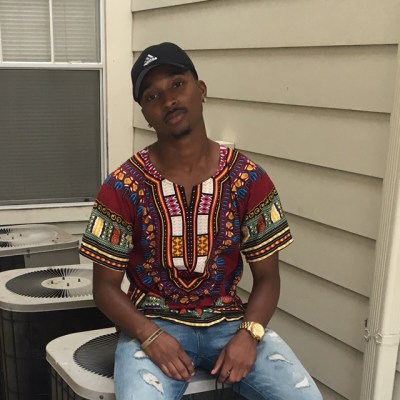
Tyree Wright dressed in his dashiki from Ghana.
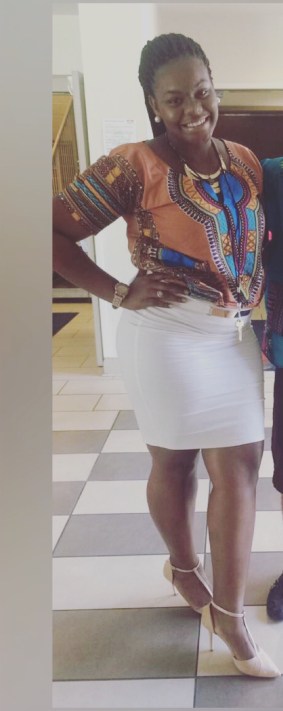
Savannah State University student, Symone Tote, Dashiki from Ghana

