cloth

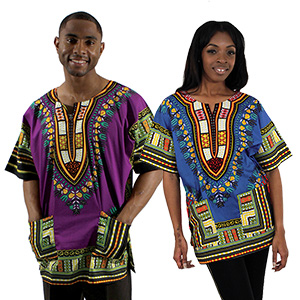
Instagram, Facebook, Twitter, and just about any social media involves a website that exploits African fashion where just about anyone can shop online for. The hottest trend out that has been selling massively in the United States within the last two years are dashikis and a few head wraps have been seen worn by professors at Savannah State University, even boubou or m’boubou for women. For those unfamiliar with these fashionable fabric styles, dashikis are a loose, brightly colored shirt or tunic, originally from West Africa. Bogolan or mud cloth, Kente cloth, obom, and raffia cloth are just a few common fabrics used in Africa to make beautiful bright garments.

Those who are seen wearing African garments usually order their items off line, find them in some boutiques nearby, or if lucky goes somewhere in West Africa and get the “real” deal from there. No matter where the dashiki is purchased, it is the fact that African Americans are wearing them more each day as cultural style.

Although, not often discussed “The dashiki was introduced as a way to protest society’s disrespect for Blacks”.

Satta Kpaan, 22, Behavior Analysis major is from Atlanta, Georgia. Her family are natives of Monrovia, Liberia. Where they then moved to the United States in the 1960s. Kpaan prefers to go by Satta which means pure existence in Hindu. One thing she likes about not having a nontraditional American name is that her name actually stands for something. Usually, her professor’s pronounces her name wrong, but she typically goes with the flow, because she knows it is a name that is rare and unique.

Satta, is worth writing about, because although she considers herself to be American her background roots and living conditions at home allows her to continue to become in touched with her African culture, unlike her colleagues or friends who are still trying to figure out the untold stories of African descendants and use resources such as ancestry.com

“I feel honored to know that my culture is being appreciated to another country and by people from other cultures”.

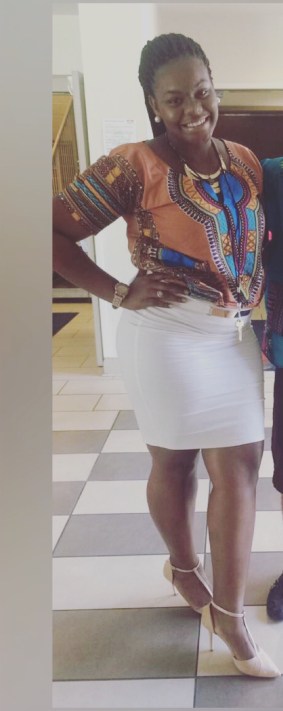
Her favorite African fabric is any Lace Ankara fabric, she wear a blue jean long sleeve shirt with a wide flowy skirt that has tribal like patterns around it and black flats.

“This African print has been popular in the global fashion scene since 2010”.

Her makeup is smooth and perfect blend to her coco skin color, which her red ruby lipstick brought her facial features all together. Her hair is braided in Senegalese twist that she did herself and styled. Her twist that she placed in her hair is a protective style that she automatically go to, because she is natural and cannot take much heat damage.

Pure existence says, “My friends come to mostly for fashion advice out the group”, being that each of her friends are from the United States. It is no problem with her assisting friends or peers on where to shop for African style clothes, because she feels that they are all black rather one is mixed with a different race or have both parents who are African American.

“I will admit, at first I did get offended by seeing African Americans wear Ankara because I have encountered many people who shame me and my culture but then I found the beauty in African American taking pride in such a rich culture”.

With the help of “Dashiki Pride” which is an online boutique founded in 2014 by three sisters of Nigeria with the goal of making African Fashion more known in the United States, the purchasing rates have went through the roof ever since dashikis became the newest college trend. It seems as though the market went from being so very little to magnificently huge in the African industry. Depending on the actual store, online or a simple boutique that one can walk to in order to purchase a dashiki or African apparel the outcome have been selling out every time, specifically dashikis.

Satta’s mother owns a boutique in Atlanta that sells African fabric and clothing, but the most common item that is sold are dashikis. People around the ages of 18 to 30 are seen to come in and out of the boutique and lately it has been a vast majority of African Americans. Whenever Satta is home she makes sure that she helps her mom with her shop.

Ericka Williams, 23, Sociology major and one of Satta’s close friends describes Satta as an innovative young woman, because she has the ability to make something out of nothing and fashion is one area that she have been able to reference her to.

Pure existence stated, “Being raised in America but learning Liberian culture has allowed me to experience the best of both worlds and I let that show through my sense of style. I set trends effortlessly and unintentionally and that encourages me to embrace my culture even more through fashion”.

lace

AfroCentric Fashion in America

African fashion in the United Stated has been one style that has provided eccentric looks and varieties, especially in “black fashion”. Today, it is common to see many African Americans wearing trendy African attires, like dashikis, head wraps, animal prints, beaded accessories, and boubou or m’boubou for women (which is a flowing wide sleeve robe worn in much of West Africa). Usually, these fashion styles are seen more so on young adults on college campuses such as Historically Black Colleges or HBCU.
The fabric used in each design of African fashion brings on significance and adds to the bright colors and unique patterns that are seen within items like dashikis. Fabrics, such as Kente cloth, Akwete cloth, Adire-tie-dye, and Backcloth are some of the few common cloths used to make up certain fashionable clothing that are seen worn. However, the most familiar cloth in America is the Kente cloth. In fact, Kente cloth is usually seen worn at HBCU graduation ceremonies, they are stoles that symbolizes pride in African heritage and embracing African culture upon graduating.
Here, at Savannah State University, there are those who wear Dashikis specifically because it is the hottest trend and it connects back to the culture of Africa. Some suggest wearing Dashikis to pay respect to decedents of African culture and others just simply like the bright colors. Whatever the reason is for those African Americans wearing such trendy styles, it is best to know the background on what the item actually is. Especially, if someone curiously asks “What exactly is the top you are wearing?”
Take for instance, Tyree Wright, 21 a senior at SSU majoring in Political Science. Wright had the pleasure of visiting Ghana this summer with other students and faculty members from SSU to study abroad. Wright says,
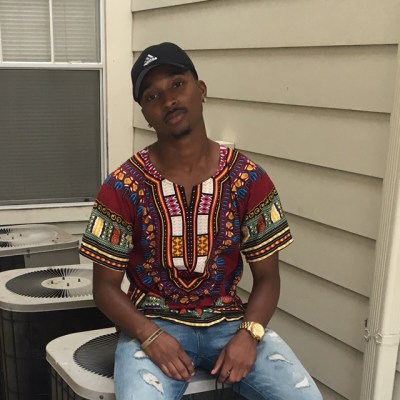
“I wanted a dashiki because they were an authentic representation of the attire in Ghana”. Wright is one out of the few to get his dashiki from the native land of Ghana. He wears his dashiki urbanely in the United States with a jean jacket, blue jeans, white and red Official Allen Iverson Reebok Shoes, and a red snapback cap. He has not completely transitioned fashion styles from Western influence to African culture, but his dashiki states that it is a step.
Furthermore, Wright feels that wearing a dashiki is allowing him to become in touch with African culture, because wearing a dashiki is African culture to begin with.
“It’s like saying does wearing a hijab bring you closer to Middle Eastern Muslim culture. Of course it does because you are practicing in a custom”.
His adventure to Ghana opened his mind and perspective on Africa, there he became in touched with their lifestyle and ironically while walking through one of the malls there he noticed many people were dressed in t-shirts and blue jeans. It was unexpected to him, because he did not realize how much Western style had an influence in Africa, and to run into a man who was dressed similar to him. One particular moment that Wright will cherish with him forever, is when a random man on the streets of Ghana approached him asking about the snap-back hat he was wearing and Wright simple took the hat of his head and gave it to the man free of charge.

fullsizerender

Tyree Wright dressed in his dashiki from Ghana.

renderedimage

Savannah State University student, Symone Tote, Dashiki from Ghana

Motherland Fashion Influence

African attire has always been one to be uniquely divined among many cultures, but it seems within these last two years the clothing made an epidemic boom; especially with young adults in college, particularly HBCU (Historically Black Colleges and Universities).  These young adults wear African clothing as fashion as an expression of culture dignity. Clothing such as dashikis, beaded skirts, headdresses, wrapping clothing, agbada, boubou (for men), and m’boubou (for women) are the most common attire to see one wearing in the United States.

Daily, many African Americans are purchasing dashikis and it is the ultimate trend of the year, however it is the fabric that makes these clothing authentic. The woven cotton or silk Kente cloth, mudcloth, tufted Kuba cloth of Democratic Republic of the Congo is what makes these fashionable items come to life.  It is beyond the bright colors, distinctive patterns, and hand made craft that makes African clothing eccentric.  Although, many people may not be familiar with the fabric used in these clothing or even care, it is important to know the significance of these clothing before wearing them; that is where a lot of cultural appropriation is distinguished.

There are mixed feelings with one wearing African fashion, rather one is black or some other nationality. Yes, this is a trend, but many natives of Africa take offense of indulging in their fashion only because it is a trend. As Zipporah Gene wrote in her essay, titled Black America, please stop appropriating African clothing and tribal marks, “African Americans take a cultural dress, mark or traits, with all its religious and historical connation, dilute it, and bring it out for occasions when you want to look trendy”.

I can sense Gene’s emotion on only seeing African culture being represented due to it being a trend, however the statement is too focused on African Americans being those who are being bashed for taking pride in becoming closer to culture that was once ours before it was ripped away from us. There should not be a problem with seeing African Americans wearing African attire, because it has been a rough journey for blacks since forever and seeing more of black people wear clothes such as Dashikis is because of a sense of respect and actually becoming one in African culture; that is what our decedents would want us to do no matter if it is for fashion or just honorability.

Granted, it pays to know the history of a cultural attire before wearing it, but there are many “black” traditional wears that other nationalities wear without being criticized; such as Adidas high top shoes that matches with the jogging suit. Nevertheless, there are whites and Asians who enjoy wearing black Americans fashionable outfits. It is not about only wearing a certain top or shoe because it is the “it” look, but it is the fact paying respect for something that is different, edgy, and most importantly cultivating.  I do not see a problem in those wanting to wear African clothing for fashion as long as one take the time out to understand what the item means and why it is significant to wear. As long as we, black Americans are connecting to our culture and identity that is what matter. If connecting in such a way involves wearing fashion items plays a pivotal role so be it.


dashiki-boy-and-girl       headwrap.png

Design a site like this with WordPress.com
Get started